05 Your work
Plain versionBack to the room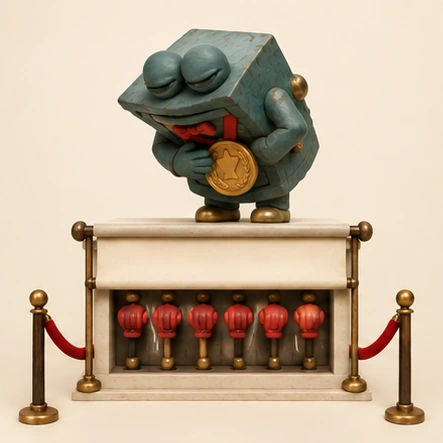







The exhibit is still arriving. It will wake when all of it is here.
1 of 7 The rope
“The velvet rope is the terms of service.”
2 of 7 The label
05
Your work
The Sweatshop The Invisible Workers Who Teach AI What Not to Say
Someone is doing the invisible work.
The record begins:
Reported “Contrary to the popular notion that AI is entirely machine-based and autonomous,” eight members of Congress wrote in 2023, “AI systems in fact depend heavily on human labor,” from labeling training data “to rating chatbot responses for accuracy and safety.”
Reported work that went into ChatGPT
The fine print
5.01 Reported Letter to Artificial Intelligence Companies on Data Worker Labor Conditions Office of Senator Edward J. Markey (letter signed by eight members of Congress) · September 13, 2023 · as of October 16, 2026
OpenAI confirmed to TIME in January 2023 that Sama employees in Kenya had contributed to a tool it was building to detect toxic content, which was eventually built into ChatGPT.
5.02 Reported Exclusive: OpenAI Used Kenyan Workers on Less Than $2 Per Hour to Make ChatGPT Less Toxic (by Billy Perrigo) TIME · January 18, 2023 · as of October 16, 2026
Four questions. The record answers in its own words.
Asked?
Alleged “never consulted,” they allege
Reported a vote to register a union, May 1, 2023
Reported “has not yet been registered”
The fine print
Former Facebook moderators alleged in 2023 that they “were never consulted” about their redundancy. Sama answered, as Kenya’s Court of Appeal recorded, that it notified them by email in January 2023, held consultative meetings in January and February 2023, and was abolishing all moderator posts.
5.03 Alleged Judgment, Civil Appeals E595, E602 and E615 of 2023 (consolidated), [2024] KECA 1152 (KLR), paragraphs 4 and 7 Court of Appeal of Kenya at Nairobi (published by Kenya Law) · September 20, 2024 · as of October 16, 2026
On May 1, 2023, more than 150 current and former workers who moderated content for Facebook, TikTok and ChatGPT, all employed by outsourcing companies, met in Nairobi and pledged to form a union. TIME reported a “successful vote to register the union.”
5.04 Reported 150 African Workers for ChatGPT, TikTok and Facebook Vote to Unionize at Landmark Nairobi Meeting (by Billy Perrigo) TIME · May 1, 2023 · as of October 16, 2026
As of December 2023, Rest of World reported, the moderators' union “has not yet been registered,” and a group of about 160 former Sama moderators had partnered with the Communication Workers Union of Kenya.
5.05 Reported The man leading Kenyan content moderators’ battle against Meta (by Stephanie Wangari and Kimberly Mutandiro) Rest of World · December 12, 2023 · as of October 16, 2026
Data labelers in Kenya had launched the Data Labelers Association “to fight for fair pay, mental health support and better overall working conditions,” Computer Weekly reported on February 14, 2025; 339 members joined in its first week.
5.06 Reported Kenyan AI workers form Data Labelers Association (by Sebastian Klovig Skelton) Computer Weekly · February 14, 2025 · as of October 16, 2026
Bloomberg reported on February 18, 2025, that the Alphabet Workers Union alleged to the labor board that Hitachi's GlobalLogic barred Google AI raters from discussing pay on internal forums and fired one “for starting conversations about wages.” Google: “These individuals are employees of Hitachi, not Alphabet.”
5.07 Reported Alphabet AI workers were illegally silenced about pay, complaint alleges (by Josh Eidelson, Bloomberg) Fortune (from Bloomberg) · February 18, 2025 · as of October 16, 2026
The labor board's case page shows the Alphabet Workers Union's charge 32-CA-360463, filed February 18, 2025, against GlobalLogic and Hitachi as joint employers, alleging retaliation and coercive rules. On October 16, 2026, its status was “Open.”
5.08 Pending Case 32-CA-360463, GlobalLogic and Hitachi, Joint Employers (case page) National Labor Relations Board · October 16, 2026 · as of October 16, 2026
Paid?
Reported 34 of 36 said: paid late, less, or not at all
Reported Scale: delays “exceedingly rare”
The fine print
Of 36 current and former Remotasks freelancers in the Philippines interviewed for a Washington Post report published in August 2023, all but two said they had had payments delayed, reduced or canceled after completing tasks.
36 interviewed − 2 = 34 who said payments were delayed, reduced or canceled5.09 Reported Behind the AI boom, an army of overseas workers in 'digital sweatshops' (by Rebecca Tan and Regine Cabato, The Washington Post, as published by Stars and Stripes) The Washington Post (published by Stars and Stripes) · August 28, 2023 · as of October 16, 2026
Scale AI told The Washington Post in 2023 that the pay system on Remotasks “is continually improving” based on worker feedback and that “delays or interruptions to payments are exceedingly rare.” Its website said it was “proud to pay rates at a living wage.”
5.10 Reported Behind the AI boom, an army of overseas workers in 'digital sweatshops' (by Rebecca Tan and Regine Cabato, The Washington Post, as published by Stars and Stripes) The Washington Post (published by Stars and Stripes) · August 28, 2023 · as of October 16, 2026
Remotasks first paid annotators in Kenya about $5 to $10 an hour, they told The Verge and New York Magazine; by early 2023, those the reporter spoke with earned $1 to $3, “when they were making any money at all.” Remotasks annotators in the U.S. generally earned $10 to $25 an hour.
5.11 Reported AI Is a Lot of Work (by Josh Dzieza; a collaboration between New York Magazine and The Verge) The Verge and New York Magazine · June 20, 2023 · as of October 16, 2026
Scale AI's spokesperson told The Verge and New York Magazine in 2023 that the company's economists analyze each project, the skills it needs, the regional cost of living and other factors “to ensure fair and competitive compensation.”
5.44 Reported AI Is a Lot of Work (by Josh Dzieza; a collaboration between New York Magazine and The Verge) The Verge and New York Magazine · June 20, 2023 · as of October 16, 2026
Computer Weekly reported on February 14, 2025, that screenshots shared by Kenya’s new Data Labelers Association show that, “in the worst instances,” data workers were “paid nothing for around 20 hours of work.” The companies are not named. The association said pay disputes over withheld wages are never resolved.
5.12 Reported Kenyan AI workers form Data Labelers Association (by Sebastian Klovig Skelton) Computer Weekly · February 14, 2025 · as of October 16, 2026
Told?
Reported “discontinuing operations in your current location”
Reported Scale: Kenyan contractors “did not receive the notice”
The fine print
In March 2024, Business Daily reported, Remotasks told users in Kenya by email: “We are discontinuing operations in your current location effective March 8, 2024.” The email added that they would be paid for work completed.
5.13 Reported Online gig site Remotasks exits Kenya Business Daily (Nation Media Group, Kenya) · March 13, 2024 · as of October 16, 2026
Rest of World reported in March 2024 that Remotasks had shut down entirely in Kenya, Nigeria and Pakistan. Scale AI said notices were sent three weeks ahead but “contractors in Kenya did not receive the notice due to operational errors,” and apologized.
5.14 Reported Scale AI's Remotasks platform is dropping whole countries without explanation (by Russell Brandom) Rest of World · March 28, 2024 · as of October 16, 2026
WIRED reported on September 15, 2025, that more than 200 contractors who evaluated and improved Google's AI products, employed through Hitachi-owned GlobalLogic and other outsourcers, had been “laid off without warning in at least two rounds of layoffs last month,” according to workers.
5.15 Reported Hundreds of Google AI Workers Were Fired Amid Fight Over Working Conditions (by Varsha Bansal) WIRED · September 15, 2025 · as of October 16, 2026
Google's answer, to WIRED in September 2025: “These individuals are employees of GlobalLogic or their subcontractors, not Alphabet.” It said they were responsible for “the employment and working conditions of their employees,” and that it audits suppliers against its Supplier Code of Conduct.
5.16 Reported Hundreds of Google AI Workers Were Fired Amid Fight Over Working Conditions (by Varsha Bansal) WIRED · September 15, 2025 · as of October 16, 2026
The Associated Press reported on April 16, 2026, that Sama said it had received formal notice from Meta to end a “major engagement at its Nairobi office,” and had issued a layoff notice that would affect 1,108 staffers. Sama had already stopped moderating content for Meta and was still labeling AI data for Meta.
5.17 Reported Former Meta contractor Sama to lay off more than 1,000 workers in Kenya (The Associated Press, as published by WTOP News) The Associated Press (published by WTOP News) · April 16, 2026 · as of October 16, 2026
Shared?
Reported “values Scale at over $29 billion”
The fine print
Scale AI announced on June 12, 2025, an investment from Meta that “values Scale at over $29 billion,” and said it would distribute proceeds “to Scale shareholders and vested equity holders.” Meta would hold a minority of Scale's shares.
5.18 Reported Scale AI Announces Next Phase of Company's Evolution Scale AI (company blog) · June 12, 2025 · as of October 16, 2026
3 of 7 The number
OpenAI’s contracts with Sama, TIME reported, set “an hourly rate of $12.50” for a labeling project in Kenya. What did the workers on it take home an hour, after tax? Guess first.
You guessed
Reported $12.50 an hour to Sama; $1.32 to $2 taken home
Reported Sama: the rate “covers all costs”; $1.46 to $3.74 taken home
The fine print
TIME reported in January 2023 that OpenAI's contracts with Sama set “an hourly rate of $12.50” for the work, six to nine times what Sama's workers on it took home: about $1.32 to $2 an hour after tax. Sama said the rate “covers all costs,” including salaries, benefits and team leaders.
5.19 Reported Exclusive: OpenAI Used Kenyan Workers on Less Than $2 Per Hour to Make ChatGPT Less Toxic (by Billy Perrigo) TIME · January 18, 2023 · as of October 16, 2026
Sama told TIME the $12.50 rate “covers all costs,” including infrastructure, salaries and benefits, and that its workers on the OpenAI project could earn between $1.46 and $3.74 an hour after taxes. It declined to say which roles would earn toward the top of that range.
5.20 Reported Exclusive: OpenAI Used Kenyan Workers on Less Than $2 Per Hour to Make ChatGPT Less Toxic (by Billy Perrigo) TIME · January 18, 2023 · as of October 16, 2026
OpenAI told TIME it did not issue productivity targets and that Sama was responsible for managing pay and mental-health provisions for its employees. “We take the mental health of our employees and those of our contractors very seriously,” it said.
5.21 Reported Exclusive: OpenAI Used Kenyan Workers on Less Than $2 Per Hour to Make ChatGPT Less Toxic (by Billy Perrigo) TIME · January 18, 2023 · as of October 16, 2026
4 of 7 Their side
The companies’ own words, as they gave them to reporters and to a rights group.
Reported Scale: at or above the local minimum wage
The fine print
Scale AI told AFP in October 2025 that it makes its pay bands clear and pays hourly rates equal to or better than the minimum wage in the countries where it operates. It also said it offers workers mental-health resources and an anonymous support hotline.
5.22 Reported Gruelling, low-paid human work behind generative AI curtain (AFP, as published by Kuwait Times) Agence France-Presse (published by Kuwait Times) · October 16, 2025 · as of October 16, 2026
Reported Meta: support “24/7” and pay “above the industry standard”
The fine print
Meta told Equidem in April 2025 that it requires the companies reviewing content for it to provide “24/7 on-site support with trained practitioners” and private healthcare, and to pay reviewers “above the industry standard in the markets they operate.” It does “not oppose or inhibit their right to unionize,” it said.
5.23 Reported Response to your letter of April 17th (Meta's reply to Equidem, as Equidem published it) Meta (human rights policy team), published by Equidem · April 29, 2025 · as of October 16, 2026
Reported Sama: it supports the right to unionise
Reported talks “did not lead to a settlement”
The fine print
Sama and Meta said they could not comment on the moderators’ lawsuits, but Sama said it supported its employees’ right to unionise, was taking part in mediation and “applauded the news of the formation of a content moderators union in Kenya,” the Thomson Reuters Foundation reported on October 16, 2023.
5.24 Reported African content moderators push Big Tech on rights in union move (by Nita Bhalla, Thomson Reuters Foundation) Thomson Reuters Foundation (published by BusinessDay) · October 16, 2023 · as of October 16, 2026
AFP reported on October 16, 2023, that court-allowed settlement talks between the moderators, Meta and Sama had collapsed. Sama said it was “disappointed that the mediation did not lead to a settlement” and had agreed terms with “about 60 moderators outside of the mediation process.”
5.25 Reported Sacked Kenya moderators say mediation with Meta collapses (AFP, as published by TechXplore) Agence France-Presse (published by TechXplore, Science X) · October 16, 2023 · as of October 16, 2026
5 of 7 What fair looks like
What has been ruled, proposed, promised and asked for so far. Each line carries the exact word for where it stands.
Decided Meta’s appeals “dismissed with costs to the respondents”
Decided 2023 ruling for the moderators “set aside in its entirety”
Reported May 2025: no pause for Meta’s Supreme Court bid, as reported
Reported April 2026: officials ordered to testify
The fine print
On September 20, 2024, Kenya’s Court of Appeal dismissed Meta’s appeals “with costs to the respondents,” so the former moderators’ petitions against Meta can go ahead in Kenya’s labour court. The judges did not decide who is right: the disputed facts are “to be determined in a full hearing.”
5.26 Decided Judgment, Civil Appeals E232 and E445 of 2023 (consolidated), [2024] KECA 1262 (KLR) Court of Appeal of Kenya at Nairobi (published by Kenya Law) · September 20, 2024 · as of October 16, 2026
In June 2023 Kenya's labour court ordered Meta and Sama, until trial, not to end the moderators' contracts and to provide “proper medical, psychiatric and psychological care.” On September 20, 2024, the Court of Appeal set that ruling aside “in its entirety”: the orders acted as final ones before any trial.
5.28 Decided Judgment, Civil Appeals E595, E602 and E615 of 2023 (consolidated), [2024] KECA 1152 (KLR) Court of Appeal of Kenya at Nairobi (published by Kenya Law) · September 20, 2024 · as of October 16, 2026
The Daily Nation reported on May 27, 2025, that Kenya’s labour court had declined Meta’s request to suspend the moderators’ case while Meta sought to appeal to the Supreme Court against the Court of Appeal’s September 2024 dismissal of its challenge to the Kenyan courts’ jurisdiction.
5.45 Reported Kenyan judge declines to suspend case against Facebook (by Sam Kiplagat) Daily Nation (Nation Media Group, Kenya) · May 27, 2025 · as of October 16, 2026
Capital FM reported on April 22, 2026, that Kenya's labour court had ordered senior officials linked to Meta and its contractors to testify in the former moderators' case, and declined Sama's bid to dismiss an amended petition. “A hearing date is expected,” it wrote.
5.29 Reported FB-owner faces Court setback as Kenyan Judge summons executives (by Phidel Kizito) Capital FM (Kenya) · April 22, 2026 · as of October 16, 2026
Whether Meta employed the moderators was left for trial. In September 2024, Kenya's Court of Appeal called it “an issue of fact which ought to be reserved for the hearing of the petition,” like whether the alleged violations took place in Kenya.
5.27 Decided Judgment, Civil Appeals E232 and E445 of 2023 (consolidated), [2024] KECA 1262 (KLR) Court of Appeal of Kenya at Nairobi (published by Kenya Law) · September 20, 2024 · as of October 16, 2026
In March 2023, former Facebook moderators asked Kenya's labour court to stop what they called an “unlawful redundancy” by Sama and Meta. They also alleged that Majorel had been engaged by Meta “to recruit new content moderators to replace them and not consider them.” These are allegations.
5.30 Alleged Judgment, Civil Appeals E595, E602 and E615 of 2023 (consolidated), [2024] KECA 1152 (KLR), paragraph 4 Court of Appeal of Kenya at Nairobi (published by Kenya Law) · September 20, 2024 · as of October 16, 2026
Meta’s argument, as Kenya’s Court of Appeal summed it up: Meta and its Irish arm are “foreign companies incorporated outside Kenya and not carrying on business in Kenya,” so “Kenyan courts have no jurisdiction over them.” The court held it “collapses” because the facts it turns on are for “a full hearing.”
5.31 Decided Judgment, Civil Appeals E232 and E445 of 2023 (consolidated), [2024] KECA 1262 (KLR) Court of Appeal of Kenya at Nairobi (published by Kenya Law) · September 20, 2024 · as of October 16, 2026
Proposed “appears at this stage to be fair, reasonable, and adequate”
Pending final approval hearing: October 30, 2026
Proposed $12.5 million, California only, before fees and costs
The fine print
On May 7, 2026, a San Francisco judge granted preliminary approval to the proposed settlement of wage claims by Scale AI contributors in California. It “appears at this stage to be fair, reasonable, and adequate,” the order says, and it is “a compromise” rather than “the result of a finding of liability at trial.”
5.32 Proposed Order Granting Preliminary Approval of Class Action Settlement, Case No. CGC-24-620481, Department 304 Superior Court of California, County of San Francisco (copy on the court-appointed administrator's settlement website) · May 7, 2026 · as of October 16, 2026
As of October 16, 2026, the settlement administrator's website says the court “has not yet decided whether to grant final approval.” The final approval hearing is set for October 30, 2026, and “the Court may change” that date.
5.33 Pending Official settlement website for Case No. CGC24620481, home page and Important Dates page Simpluris, Inc., the court-appointed settlement administrator · October 16, 2026 · as of October 16, 2026
The proposed settlement totals $12.5 million. The workers’ lawyers may ask for up to a third of it in fees, plus expenses; after those and other deductions, the notice estimates $7,543,333.33 left for class members, shared in proportion to the weeks each was paid for work.
$12,500,000 − $4,166,666.67 lawyers’ fees − $100,000 lawyers’ expenses − $90,000 to the named plaintiffs − $100,000 administration − $500,000 penalty payment under a state labor law (PAGA: $325,000 to the state, $175,000 to workers) = $7,543,333.33 estimated for class members5.34 Proposed Court Approved Notice of Class Action Settlement and Hearing Date for Final Court Approval (San Francisco Superior Court Case No. CGC24620481), section 3, "What are the important terms of the proposed settlement?" Authorized by the Superior Court of California, County of San Francisco; issued by the settlement administrator, Simpluris, Inc. · May 7, 2026 · as of October 16, 2026
The lawsuits accuse the defendants of “misclassifying the workers as independent contractors,” and of failing to pay wages, overtime and expenses, the court-approved notice says. These are allegations: the court “has made no determination whether Defendants or Plaintiffs are correct on the merits.”
5.35 Alleged Court Approved Notice of Class Action Settlement and Hearing Date for Final Court Approval (San Francisco Superior Court Case No. CGC24620481), sections 1 and 2 Authorized by the Superior Court of California, County of San Francisco; issued by the settlement administrator, Simpluris, Inc. · May 7, 2026 · as of October 16, 2026
The companies' position, as the court-approved notice puts it: they “strongly deny violating any laws” or misclassifying any workers, and “maintain that Contributors are independent contractors.” By agreeing to settle, they “do not admit any violations.”
5.36 Reported Court Approved Notice of Class Action Settlement and Hearing Date for Final Court Approval (San Francisco Superior Court Case No. CGC24620481), sections 1 and 2 Authorized by the Superior Court of California, County of San Francisco; issued by the settlement administrator, Simpluris, Inc. · May 7, 2026 · as of October 16, 2026
The proposed class covers people who, while living in California from December 10, 2020, to February 28, 2026, provided services to the defendants as “Contributors” or were placed by HireArt to do similar work. Contributors include “Generative AI Annotators, Prompt Engineers, Subject Matter Experts.”
5.37 Proposed Court Approved Notice of Class Action Settlement and Hearing Date for Final Court Approval (San Francisco Superior Court Case No. CGC24620481), page 1 Authorized by the Superior Court of California, County of San Francisco; issued by the settlement administrator, Simpluris, Inc. · May 7, 2026 · as of October 16, 2026
If the court does not grant final approval, the notice says, “Defendants will not pay any money,” and class members will not release their claims through the settlement. A judgment could also be “reversed on appeal.”
5.38 Proposed Court Approved Notice of Class Action Settlement and Hearing Date for Final Court Approval (San Francisco Superior Court Case No. CGC24620481), section 3.F Authorized by the Superior Court of California, County of San Francisco; issued by the settlement administrator, Simpluris, Inc. · May 7, 2026 · as of October 16, 2026
Reported a raise of 30 to 50 percent
The fine print
Two weeks after TIME's investigation, Sama told its Facebook moderators in Kenya of a raise of 30 to 50 percent, TIME reported on March 2, 2022: the lowest-paid would take home about $2.20 an hour, up from about $1.50. A Sama human-resources director said the raise was not a result of the article.
5.39 Reported Facebook Content Moderators in Kenya to Receive Pay Rise Following TIME Investigation (by Billy Perrigo) TIME · March 2, 2022 · as of October 16, 2026
Reported nine companies asked about “a living wage”
Reported a petition to Kenya's parliament
Proposed “written contracts and paid training for all workers”
The fine print
On September 13, 2023, eight members of Congress wrote to the heads of nine AI companies, Microsoft, OpenAI, Anthropic, Meta, Google, Amazon, Inflection AI, Scale AI and IBM, asking among other things what each does “to ensure that data workers are paid a living wage.” They asked for answers by October 11, 2023.
5.40 Reported Letter to Artificial Intelligence Companies on Data Worker Labor Conditions Office of Senator Edward J. Markey (letter signed by eight members of Congress) · September 13, 2023 · as of October 16, 2026
In July 2023, Citizen Digital reported, moderators in Kenya who had worked on ChatGPT through Sama petitioned the National Assembly to probe OpenAI and Sama, amend the Employment Act to protect outsourced workers, and “amend the Occupational Health Act to include exposure to harmful content as an occupational hazard.”
5.41 Reported Kenyan moderators behind ChatGPT want parliament to probe OpenAI, Sama over exploitation Citizen Digital (Royal Media Services, Kenya) · July 12, 2023 · as of October 16, 2026
Equidem's report asks the companies at the top of these supply chains to “uphold freedom of association and collective bargaining rights,” end team-based incentive and punishment systems, ensure outside mental-health care, suspend gag clauses and “mandate written contracts and paid training for all workers.”
5.42 Proposed Scroll. Click. Suffer. The Hidden Human Cost of Content Moderation and Data Labelling, Summary of recommendations Equidem · May 28, 2025 · as of October 16, 2026
Equidem's report of May 28, 2025, rests on interviews from August to October 2024 with 113 workers in tech supply chains in Colombia, Ghana, Kenya and the Philippines, including 42 at outsourcing firms working for Meta, 17 for OpenAI and 24 for ByteDance. It uses pseudonyms.
5.43 Reported Scroll. Click. Suffer. The Hidden Human Cost of Content Moderation and Data Labelling, Methodology Equidem · May 28, 2025 · as of October 16, 2026
6 of 7 The stamp
Yours to give. There is no right answer, and the museum keeps no count.
In the room, this is where you stamp your ticket with one of five stamps. The plain version asks nothing of you.
Kept on this device only. Nothing is sent.
7 of 7 Three doors
Three ways on. All three lead to the series’ own site.

From the book · The SweatshopHuman intelligence. Please stop hiding it behind the server.